Particle system can be atached to any mesh object. Control methods include weight painting, textures, curve guides, wind and vortex effects. Particles can be deflected by moving geometry
Hair strands can be created by a static particle system, supporting all particle control methods
Fluid simulator with fully animated inflow, outflow, obstacle and fluid objects. Gravity and viscosity settings can also be animated. Supports vector blur and is integrated with the particle system
Realtime soft body solver integrated in mesh, lattice, curve and text objects. Supports collision detection and particle field effects like Wind or Vortex, soft bodys can also be baked for faster playback/rendering
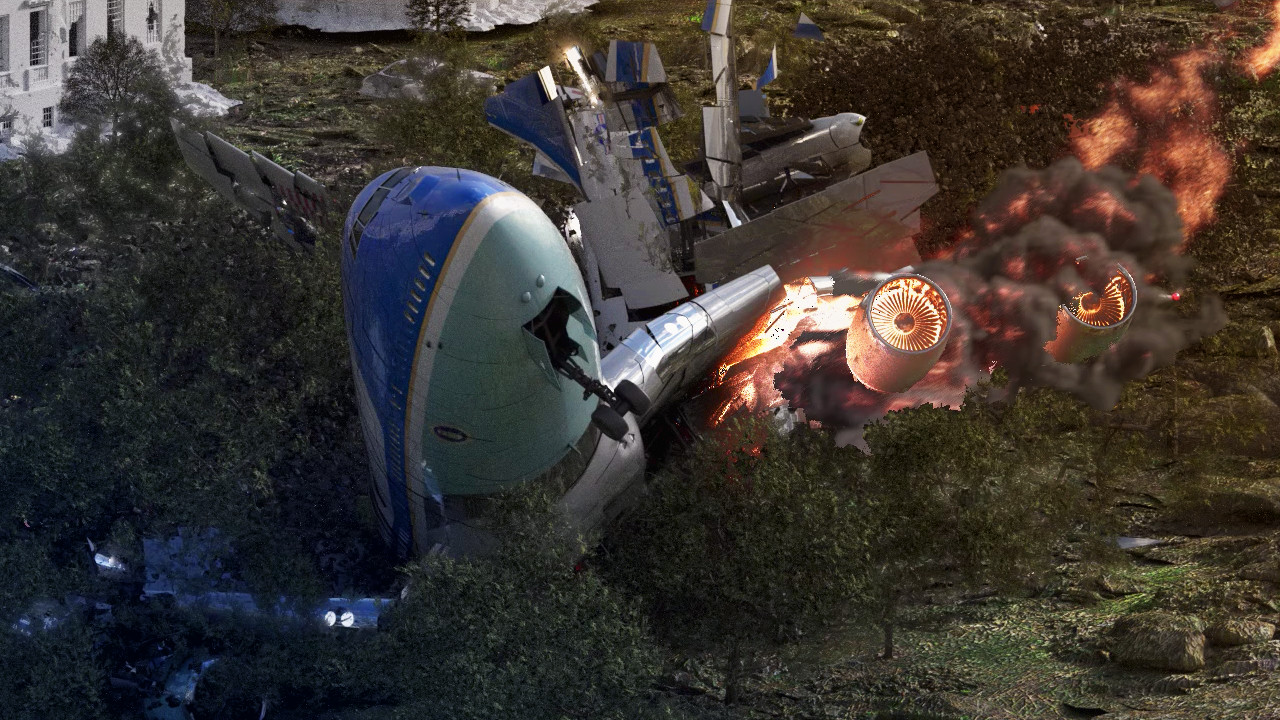
Game engine rigid body physics can be easily baked into animation curves
Realtime 3D/Game Creation
Graphical logic editor for defining interactive behavior without programming
Collision detection and dynamics simulation now support Bullet Physics Library. Bullet is an open source collision detection and rigid body dynamics library developed for Play Station 3
Shape types: Convex polyhedron, box, sphere, cone, cylinder, capsule, compound, and static triangle mesh with auto deactivation mode
Discrete collision detection for RigidBody simulation
Support for in-game activation of dynamic constraints
Full support for vehicle dynamics, including spring reactions, stiffness, damping, tyre friction etc
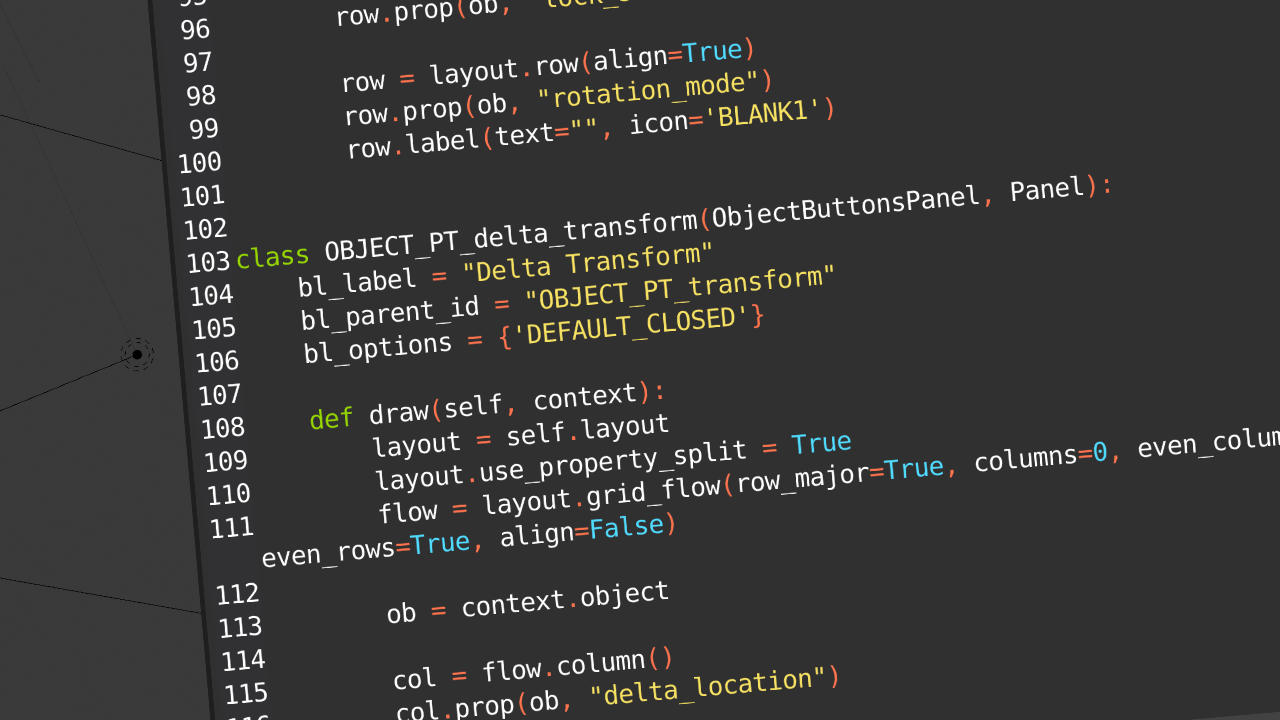
Python scripting API for sophisticated control and AI, fully defined advanced game logic
Support all OpenGLTM lighting modes, including transparencies, Animated and reflection-mapped textures
Support for multimaterials, multitexture and texture blending modes, per-pixel lighting, dynamic lighting, mapping modes, GLSL vertexPaint texture blending, toon shading, animated materials, support for Normal Maping and Parallax Mapping
Playback of games and interactive 3D content without compiling or preprocessing
Audio, using the SDL toolkit
Multi-layering of Scenes for overlay interfaces
Modeling
A range of 3D object types including polygon meshes, NURBS surfaces, bezier and B-spline curves, metaballs, vector fonts (TrueType, PostScript, OpenType)
Very fast Catmull-Clark subdivision surfaces with optimal iso-lines display and sharpness editing
Full multiresolution sculpting capabilities with 2D bitmap/3D procedural brushes (Paint, Smooth, Pinch, Inflate, Grab) supporting symmetry
Export scripts available for external renderers such as Renderman (RIB), Povray, Virtualight, lux render, Indigo, V-Ray
Shading
Diffuse shaders such as Lambert, Minnaert, Toon, Oren-Nayar, Lambert
Specular shaders such as WardIso, Toon, Blinn, Phong, CookTorr
Node editor for creating and mixing complex materials
PyNodes: write your own Python shaders with realtime feedback, no need to compile
Material previews rendered by main render engine
Fast, realistic subsurface scattering
Blurry reflections and refractions
Tangent shading to give any shader an anisotropic effect
Versatile procedural textures system
Reflection maps
Normal, displacement and bump maps
Imaging and Compositing
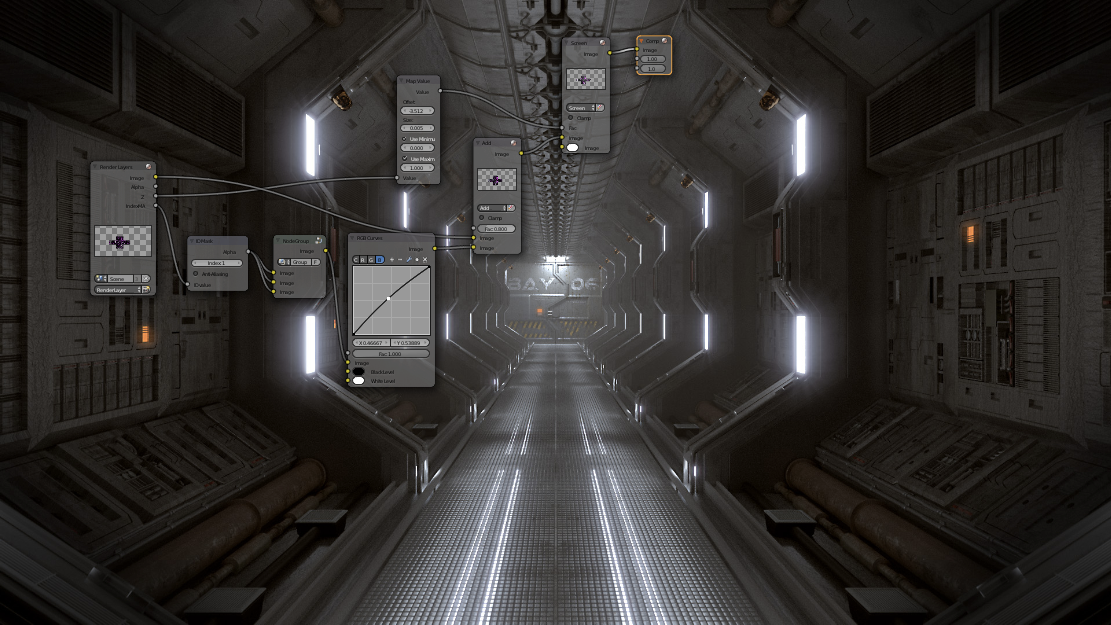
Compositor tightly integrated and aligned with the rendering pipeline
MultiLayerOpenEXR files allow to store and reuse raw renderlayer and passes data
Complete list of composite node filters, convertors, color and vector operators and mixers including Chroma Key, Blur, RGB Curves, Z Combine, Color Ramp, Gamma Correct
Preview panel to define the portion of interest. A composite then only happens on this part
Threaded and memory efficient (up to 8 processors)
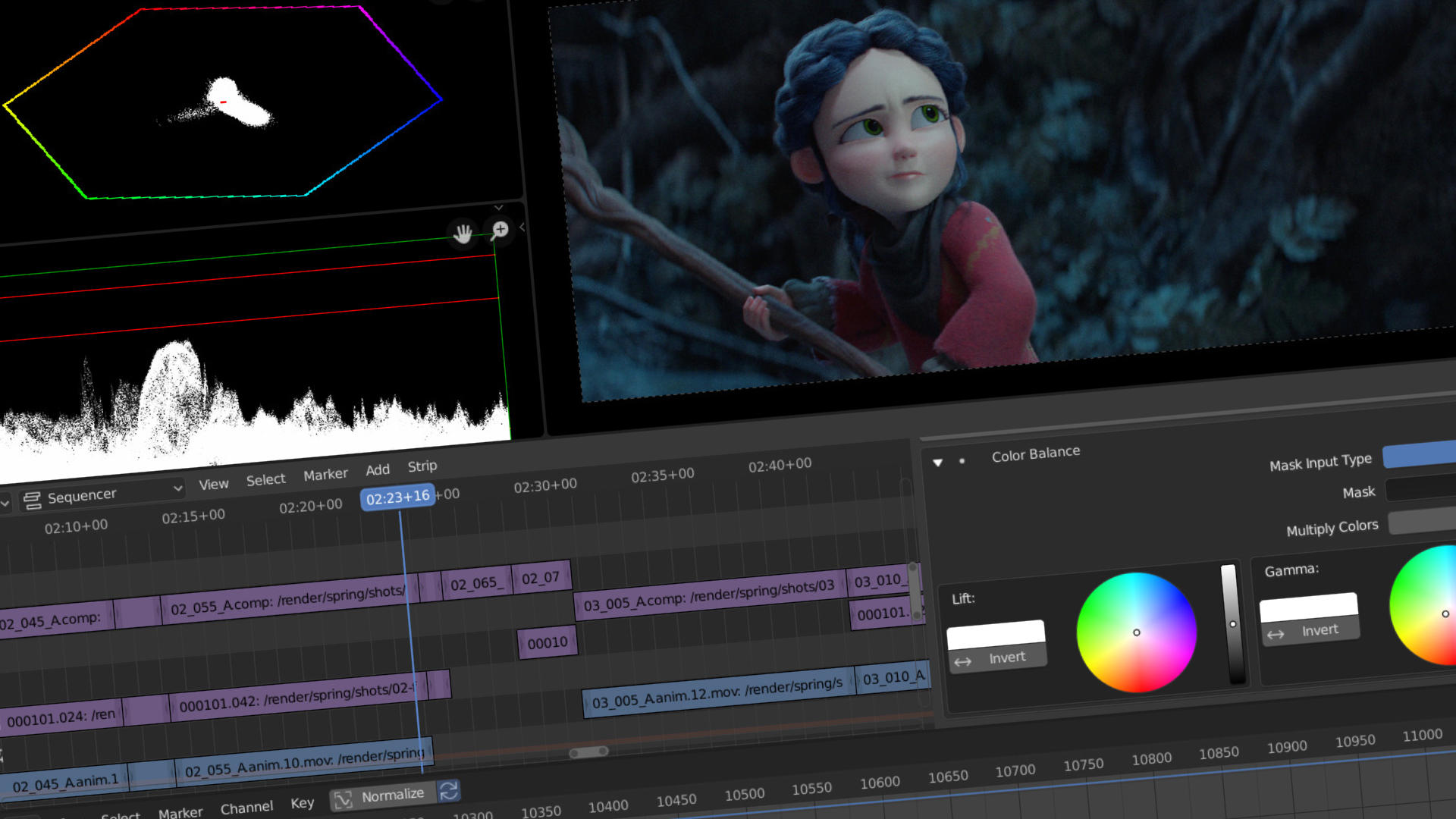
Near realtime sequencer can edit hours of video
Waveform and U/V scatter plots
Open and write many audio & video file formats using ffmpeg
Can render using frameserver-support directly into foreign applications
Supports float images as well as regular 8 bits images
Curves tool allows you to create a mapping from the float range to a displayable result (for HDR images)
Files
Save all scene data in a single .blend file, even images, sounds or fonts can be packed for easy transportation
Powerful built-in database system allowing instances, scene management, and dynamic linking multiple project files
.blend format supports compression, digital signatures, encryption, forwards/backwards compatibility and can be used as a library to link to from other .blend files
Read and write support for many other 2D and 3D formats
2D TGA, JPG, PNG, OpenEXR, DPX, Cineon, Radiance HDR, Iris, SGI Movie, IFF, AVI and Quicktime GIF, TIFF, PSD, MOV (Windows and Mac OS X)
3D 3D Studio, AC3D, COLLADA, FBX Export, DXF, Wavefront OBJ, DEC Object File Format, DirectX, Lightwave, MD2, Motion Capture, Nendo, OpenFlight, PLY, Pro Engineer, Radiosity, Raw Triangle, Softimage, STL, TrueSpace, VideoScape, VRML, VRML97, X3D Extensible 3D, xfig export